
- 20/12/2025
- Mulshi Speciality Hospital
- 0 Comments
- Blogs
7 Common Myths About Constipation You Should Stop Believing
At Mulshi Speciality Hospital, we often meet patients who struggle with constipation for months because of misinformation. Constipation is common, but the myths surrounding it make people delay proper care or follow remedies that don’t actually help. Understanding the truth is the first step toward better digestive health.
Here are 7 common myths about constipation you should stop believing along with the real facts.
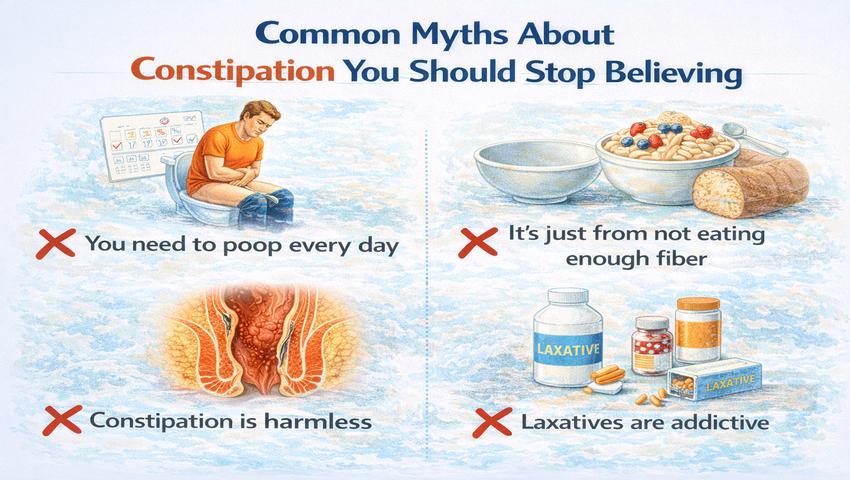
1. Myth: Constipation Means You Don’t Poop Every Day:
Missing a day doesn’t always mean constipation.
Everyone’s bowel routine is different. What really defines constipation is:
- Hard or dry stools
- Straining to pass stools
- Feeling incomplete emptying
It’s the difficulty, not the frequency, that matters.
2. Myth: It Happens Only Because of Low Fiber:
Low fiber contributes, but it’s not the only cause. Constipation can result from:
- Poor hydration
- Stress
- Lack of physical activity
- Medications
- Thyroid or hormonal changes
A complete lifestyle approach works better than just adding fiber.
3. Myth: Drinking More Water Alone Can Cure Constipation:
Water is important, but it cannot fix constipation by itself.
To improve digestion, you also need:
- Good dietary habits
- Regular movement
- Proper sleep
- Healthy gut routine
Underlying medical causes need professional care.
4. Myth: Laxatives Are Harmful and Should Be Avoided:
When prescribed by a doctor, laxatives are safe and effective.
Problems arise only with:
- Overuse
- Self-medication
- Strong products taken without guidance
Doctor-guided laxatives help relieve symptoms and prevent complications.
5. Myth: Constipation Is a Small Issue:
Ignoring constipation can lead to:
- Piles (hemorrhoids)
- Anal fissures
- Abdominal pain
- Bloating and discomfort
Chronic constipation affects daily life and should be treated early.
6. Myth: Only Older People Get Constipated:
People of all ages can experience constipation children, adults, pregnant women, and seniors.
Modern lifestyle habits make younger people equally prone.
7. Myth: If You Don’t Feel the Urge, Just Force It:
Forcing bowel movements can worsen the problem and cause pain or bleeding.
Healthier options include:
- Eating fiber-rich meals
- Setting a routine
- Staying active
- Not delaying natural urges
Gentle habits work better than force.
When Should You See a Doctor?
Consult a doctor if you have:
- Severe or long-lasting constipation
- Blood in stools
- Sudden bowel habit changes
- Unexplained weight loss
- Frequent discomfort or bloating
Timely treatment prevents further complications.
Tips to Prevent Constipation Naturally:
- Drink enough water
- Increase fiber in your meals
- Avoid too much oily or packaged food
- Exercise regularly
- Maintain a fixed eating and sleeping schedule
Simple changes can bring long-term relief.
Conclusion:
Understanding what’s true and what’s not can help you take better control of your digestive health. Constipation is treatable, and the right guidance can make a big difference.
Book an Appointment:
Facing constipation or digestive issues? Our experts at Mulshi Speciality Hospital are here to help.